
Last Updated: 23 October 2026
Quick Summary
Laser etching services use focused laser beams to create permanent marks on materials by vaporising the surface layer, producing precise, detailed designs without physical contact. The process works on wood, metal, acrylic, slate, and leather, making it ideal for personalised gifts, branded merchandise, and custom items that demand accuracy and durability.
- Laser etching vaporises only the surface layer, creating marks typically 0.1mm deep or less, unlike laser engraving which cuts 0.5-3mm deep.
- Pricing depends on design complexity, material choice, order quantity, and turnaround time; most providers offer free quotes.
- Vector files (AI, EPS, PDF) are preferred for logos and text, whilst raster files need minimum 300 DPI resolution for crisp output.
- Etched marks are permanent and won’t fade, crack, or peel over time, making them ideal for keepsakes and branded merchandise.
- Laser etching works best on matte or textured surfaces; shiny, highly reflective materials can scatter the laser beam and reduce precision.
Table of Contents
- What Are Laser Etching Services?
- Laser Etching vs Laser Engraving: Key Differences
- Laser Etching on Metal and Other Materials
- Understanding Laser Engraving Cost and Pricing
- Laser Engraving Design File Requirements
- Why Choose Laser Etching for Gifts and Business Branding
- Frequently Asked Questions
What Are Laser Etching Services?
Laser etching services use focused laser beams to create permanent marks on many materials by vaporising the surface layer. The process produces precise, detailed designs without making physical contact with the material itself. This makes laser etching ideal for creating bespoke gifts, branded merchandise, and custom items that demand accuracy and durability.
At SAS Creations, we specialise in laser etching services that transform ordinary objects into memorable keepsakes. Whether you’re personalising a wooden box for a wedding, engraving a slate coaster for a corporate client, or marking leather accessories with your brand logo, laser etching delivers professional results with minimal waste and maximum precision.
The appeal of laser etching lies in its versatility. Unlike traditional engraving, which physically cuts into material, laser etching vaporises the surface to create clean, detailed marks. This means finer detail work is possible, and the process works equally well on wood, metal, acrylic, slate, and leather. The result is a finished product that looks polished and professional, whether it’s a one-off gift or a batch of 500 branded items.
Laser etching works best on materials with a matte or slightly textured surface. Shiny, highly reflective surfaces can scatter the laser beam, reducing precision. Always check material compatibility before committing to a large order.
Laser Etching vs Laser Engraving: Key Differences
Many people use “laser etching” and “laser engraving” interchangeably, but they’re actually different processes that suit different purposes. Understanding the distinction helps you choose the right technique for your project.
Laser etching vaporises only the surface layer of material, creating a shallow mark that’s typically 0.1mm deep or less. The process is fast, produces minimal heat, and works well for detailed designs with fine lines. Because the material removal is so shallow, etched items retain their original texture and feel.
Laser engraving, by contrast, melts or vaporises material more deeply, creating marks that are typically 0.5mm to 3mm deep depending on the material and laser power. Engraved items have a noticeably recessed appearance and feel, making them ideal when you want a bold, tactile result.
The practical difference matters. If you’re etching a name onto a wooden wedding favour, etching creates an elegant, refined look. If you’re engraving a corporate award plaque where the text needs to be deeply recessed and highly visible from a distance, engraving is the better choice.
| Characteristic | Laser Etching | Laser Engraving |
|---|---|---|
| Depth | Surface only (0.1mm) | Deeper (0.5-3mm) |
| Speed | Faster | Slower |
| Detail level | Fine lines, intricate designs | Bold, prominent marks |
| Material removal | Minimal | Significant |
| Best for | Detailed logos, fine text, photo-quality work | Awards, plaques, bold text |
For most gift and branding projects, laser etching services offer the precision and aesthetic appeal that clients expect. The shallow depth means the item’s original finish and texture remain intact, which is especially valuable when working with premium materials like leather or natural wood.
Laser Etching on Metal and Other Materials
Different materials respond differently to laser etching, and understanding these nuances ensures you get the best result for your project. Each material has its own characteristics that affect design, colour, and durability.
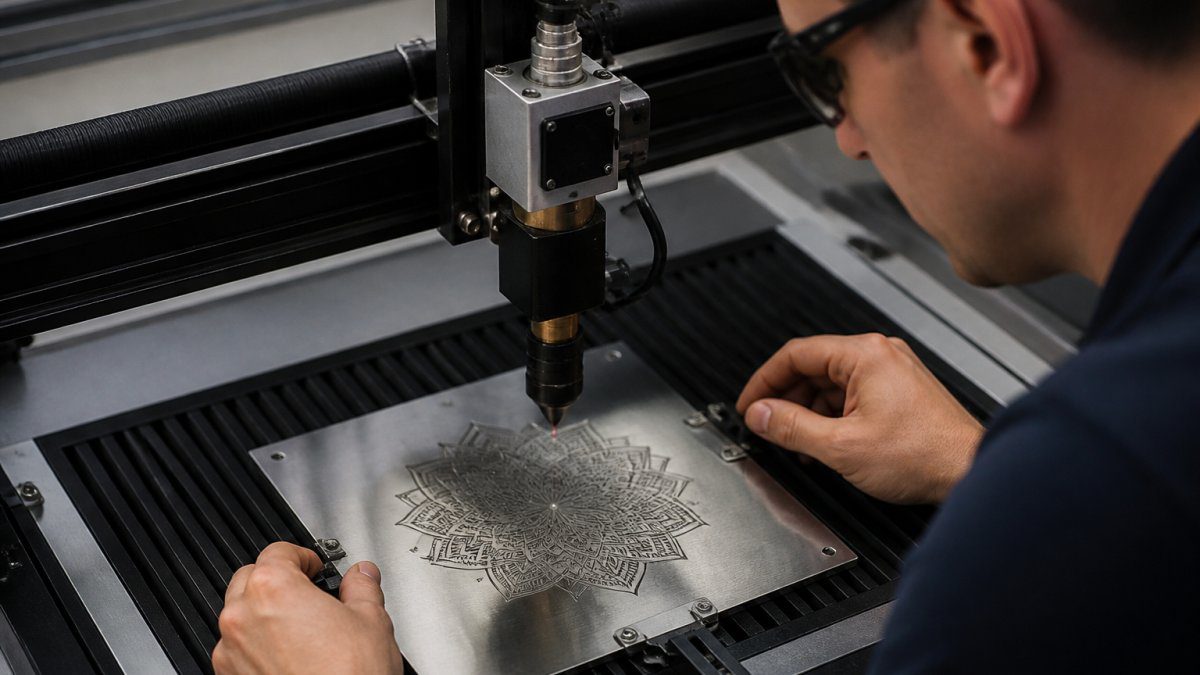
Metal is one of the most popular choices for laser etching services. Stainless steel, aluminium, and anodised metals all etch beautifully, creating a contrasting mark where the laser vaporises the surface coating or oxidises the metal beneath. On anodised aluminium, etching removes the coloured coating to reveal the silver metal underneath, creating a striking visual effect.
Wood is equally versatile. Hardwoods like walnut and oak etch cleanly with minimal charring, whilst softer woods like pine may show slightly more burn marks around the edges. The natural grain of the wood creates variation in how the laser mark appears, adding character to the finished piece. This is why wood remains popular for wedding favours, corporate gifts, and personalised home décor.
Acrylic and plastic etch to create a frosted or milky appearance where the laser passes through. Clear acrylic becomes opaque at the etched area, making text and logos stand out sharply. This is ideal for signage, awards, and decorative items where you want a modern, clean aesthetic.
Leather and slate require more care. Leather can scorch if the laser power is too high, so precision and experience matter. Slate etches beautifully with minimal risk of damage, creating a permanent white or light grey mark that contrasts sharply against the dark stone. Slate coasters, plaques, and decorative pieces are popular because the material is durable and the etching is genuinely permanent.
Avoid materials with PVC or vinyl coatings when possible. When heated, these release harmful fumes. Always verify material composition before etching, especially for items that will be used with food or by children.
Understanding Laser Engraving Cost and Pricing
Pricing for laser etching services depends on several factors, and understanding these helps you budget accurately for your project. There’s no single “standard price” because every job is different.
Design complexity is the primary cost driver. A simple one-line name takes seconds to etch, whilst a detailed logo with fine lines, shading, or photo-quality detail requires longer processing time. More complex designs also demand more careful setup and testing to ensure quality.
Material choice affects cost. Some materials are faster to etch than others. Aluminium and acrylic etch quickly, whilst leather and slate may require lower laser power and slower speeds to avoid damage, increasing processing time.
Order quantity matters significantly. A single personalised mug costs more per unit than 50 mugs with the same design. However, many laser etching services, including SAS Creations, handle small orders just as readily as bulk runs. One-off items are entirely feasible, though the per-unit cost will be higher than volume orders.
Material cost is separate from etching cost. Premium materials like slate, leather, or high-quality wood cost more than basic options, but the etching process itself may be comparable.
Turnaround time can influence pricing. Rush orders typically cost more than standard turnaround. If you need items in one week rather than three, expect to pay a premium.
Rather than guessing at costs, most providers including SAS Creations offer free quotes based on your specific design, material, and quantity. This removes uncertainty and lets you make an informed decision before committing.
Laser etching pricing is project-specific. Get a quote from your provider before assuming costs. Small orders are viable, and rush turnaround is possible, both just affect the final price.
Laser Engraving Design File Requirements
Your design file quality directly affects the final etched result. Submitting the right file format and resolution saves time, reduces errors, and ensures your design looks exactly as intended.
Most laser etching services accept vector files (AI, EPS, PDF) or raster files (PNG, JPG, TIFF). Vector files are preferred for logos, text, and geometric designs because they scale perfectly to any size without losing quality. Raster files work well for photographs, detailed artwork, or designs with gradients and shading.
Resolution matters for raster files. A minimum of 300 DPI (dots per inch) ensures crisp, detailed output. Lower resolution files may appear pixelated or blurry when etched. Vector files don’t have a DPI requirement because they’re mathematically defined, not pixel-based.
File size should be reasonable but doesn’t need to be tiny. A file under 50MB is standard. If your design includes embedded fonts, convert text to outlines first to avoid font substitution issues on the provider’s system.
Colour considerations depend on your material. For monochrome etching (most common), submit designs in black and white or greyscale.
Bleed and margins are important for batch orders. If your design extends to the edge of the material, include a small bleed area (typically 3-5mm) to account for minor positioning variations. For items like mugs or bottles with curved surfaces, ask your provider for a template showing the exact etching area.
When you submit your design to SAS Creations or any laser etching services provider, include a brief description of your intent: the material, the final size, and any special requirements. This helps the team set up the laser correctly and catch potential issues before production begins.
Why Choose Laser Etching for Gifts and Business Branding
Laser etching services have become the go-to choice for personalised gifts and branded merchandise because they deliver results that feel premium and bespoke. There are several compelling reasons why.
Permanence is the primary advantage. Unlike printed designs that fade, crack, or peel over time, laser-etched marks are permanent. They won’t wash off, fade in sunlight, or deteriorate with age. This durability makes etched gifts feel like genuine keepsakes rather than disposable items.
Customisation without compromise sets laser etching apart. You can personalise every single item differently if you choose. Engraving 50 wooden coasters with individual names is just as practical as engraving them all identically.
Professional appearance matters when you’re representing your brand or marking a special occasion. Laser etching produces clean, precise marks that look intentional and high-quality. There’s no smudging, no colour variation, no inconsistency between items.
Material versatility means you’re not locked into one option. Wood, metal, acrylic, leather, slate, you can choose the material that best suits your message and budget.
Sustainability is increasingly important. Laser etching produces minimal waste and doesn’t require inks, coatings, or chemical processes. The mark is created by vaporising surface material only, so there’s no packaging waste from ink cartridges or chemical disposal concerns.
For businesses, laser etching services offer a way to create branded merchandise that actually gets used and kept, rather than ending up in a drawer. A personalised wooden pen with your company name etched into it sits on someone’s desk.
For personal milestones, weddings, anniversaries, births, retirements, etched gifts become heirlooms. The permanence and personal touch transform a gift into something that will be treasured for years.
Choosing laser etching services means investing in quality, permanence, and personalisation. Whether you’re creating one-off gifts or branded merchandise for your business, the precision and durability of laser etching deliver results that feel genuinely special.
Frequently Asked Questions
What is the difference between laser etching and laser engraving?
Laser etching uses lower-power beams to mark the surface of a material, creating a shallow, precise mark without removing material. Laser engraving cuts deeper, removing material to form the design. For laser etching services, the shallow mark works well for fine detail and photographic images, whilst engraving suits bold logos and text. Choose etching when you want subtle, detailed personalisation; choose engraving for bolder, longer-lasting marks on wood or metal.
What materials can be laser etched for personalised gifts?
Laser etching works on wood, leather, slate, acrylic, anodised aluminium, and certain metals including stainless steel and titanium. Each material responds differently: wood produces a rich brown mark, leather darkens subtly, and metal shows a bright, clean etch. For wedding favours or corporate gifts, wood and slate are popular choices. Leather works beautifully for personalised notebooks or desk accessories. Check with your laser etching service provider about material compatibility before finalising your design.
How much do laser engraving and etching services typically cost?
Laser engraving cost depends on material type, design complexity, quantity, and turnaround time. Small runs (10-50 items) cost more per unit than bulk orders. Setup fees may apply for custom designs. For accurate pricing on your specific project, contact your service provider with details about material, quantity, and delivery deadline. Many providers offer free quotes, allowing you to compare costs before committing to an order.
What file format should I use for my laser engraving design?
Most laser engraving services accept vector files (PDF, AI, EPS, SVG) for sharp, scalable designs, and raster files (PNG, JPG, TIFF) for photographs and detailed artwork. Vector files are ideal for logos and text; raster files work for photographic-quality images. Confirm your service provider’s accepted formats and resolution requirements before submitting. High-resolution files (300 DPI minimum) ensure crisp results on your finished product.
